Tuesday, January 11, 2011

Sunday, January 9, 2011
Environment Education- a need of the hour.
The State Education machinery needs to give environmental education in schools a higher priority. I earnestly hope that the process which begun almost a decade ago has not been forgotten as Goa was one of the first few states to implement the policy of environment education as a subject. In fact, the State Education Board had also infused Environment Education in other subjects in the syllabus so as to help teachers impart local knowledge including local biodiversity, neighborhood environmental issues and activities related to garbage disposal and nature conservation. Being part of a committee then, co coordinated by Center for Environment Education, Goa State I remember the zeal and motivation then of many officers and teachers who gave time and efforts to shape and put together a comprehensive action plan as well as curriculum for environment education. In fact Teachers Training Workshops, organized by various schools and institutions were held and there was a marked increase in grassroots interest especially in the teaching community about the subject. Projects based on the environment, seminars and workshops and more importantly field trips and class room practical sessions were the backbone of this ‘movement’ that had helped create a resource pool of green teachers and environmentally conscious students too.
Today, I personally feel that the momentum has been lost somewhere and it is a matter of concern. It is a difficult job convincing a Government. I know. But it is an even more difficult job to ignore the fact that a Government implemented policy-and that too a good one at that has lost its impetus.
We all know by now that Environment studies have to be inter disciplinary and a part of our school and high school curriculum. It is an earnest need of the hour. It is not just a subject, mind you, but the kind of subject, in fact that would help address crucial issues of the state to our future generations. Garbage disposal and composting, use of renewable energy, sustainable use of natural resources, conservation of natural habitats are all matters of concern for us in Goa and our student community needs to be aware of them too.
While organizations like the WWF Goa State office and the Center for Environment Education are doing their bit, it is necessary for the Department for Education as well as the Department for Science, Technology and Environment to review the state of Environment education in Goa. Easier said than done, it would also mean identifying key resource persons and implementing agencies for revival and reshaping perhaps of earlier policies that were implemented a about a decade ago. Support from individual resource persons, experienced environment education trainers and institutions is bound to follow as it’s a national cause and one that is dear to every nature lovers heart. We need to strengthen the foundations of our society of tomorrow, with regards to respect for the environment and its components. This will only be possible if the children of today are sensitized to issues that surface around them on a daily basis in school as well as in their neighborhood.
The fact that our students need to know local environment issues and concerns, age old traditions related to conservation like Sacred Groves, or for that matter the festival of “Mange Thapne” and many such nuggets of Goan culture related to nature is a long cherished vision that many of us who have seen Goa’s rich cultural and ecological tapestry harbor. The simple truth that appreciation for nature and its life forms can only be extended through our formal and informal education system needs to be understood and accepted by us all.
It is a sincere appeal to our State Education Minister as well our Board of Education to bring life to this aspect of education in our school curriculum. Besides infusing green facts of Goa’s ecology and wildlife, culture and urban challenges of garbage management, practical projects and site visits for the student community to showcase our state in its true essence is necessary. This will go a long way in ensuring that our future generation is aware of our state’s natural resources as ecological systems. I hope the zeal of all those who helped formulate the green curriculum years ago is alive today and we will see a revival of a focused environment education in school system policy soon. Keep the faith.
Wednesday, January 5, 2011
Friday, December 31, 2010
‘The Goan Jungle Book’- a collection of articles by Nirmal Kulkarni.
About the book
The Goan Jungle Book is Nirmal Kulkarni’s attempt to bring together a collection of some articles and notes he has written for local newspapers and publications, which detail his several sojourns through the forests in and around Goa, and reflect his concerns as an ecologist and activist. The essays offer just a tiny glimpse of the teeming jungles of Goa - where creatures big and small thrive in habitats that are unexplored and seldom appreciated - through the eyes of a passionate ecologist and wildlife photographer. If you want to discover and appreciate the rarely explored wild side of Goa, this book is right up your alley.
About the Author
Nirmal Kulkarni is a Goa based herpetologist, wildlife photographer and Director (Ecology) of Wildernest Nature Resort, an eco-tel in the Chorla Ghats, and co-founder of Goa-based eco-store Earthworm.
Though he largely trawls the surviving wild outback of the Western Ghats in Goa, Karnataka and Maharashtra in search of his subjects of study, research and photography, Nirmal has also worked on research projects that looked into the contentious human-nature relationship and the increasing conflict between human, nature and the wild world in Gujarat, Assam and Arunachal Pradesh. He was part of a team that discovered two new species of legless amphibians, the caecilians - Goan caecilian (Gegeneophis goaensis) and Mhadei caecilian (Gegeneophis mhadeiensis). As a trainer, he has helped shape young nature enthusiasts into foot soldiers for India’s wildlife research and conservation movement - particularly reptile conservation.
Nirmal trained as an Applied Artist with photography as specialisation, before opting to do a Masters degree in Environment and Ecology. He has spent years documenting and photographing natural heritage, folk culture and wildlife, particularly the lesser-known species in his home state, Goa, and in the other forests and urban areas where he works as an ecologist and researcher.
‘The Goan Jungle Book’ is aimed at creating awareness amongst the Goan public at large about the lesser known biodiversity of Goa and its forests and is available at all major book stores across the state.
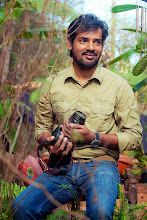
Nirmal Kulkarni
For details contact- ophidian_nirmal@yahoo.co.in
Sunday, December 26, 2010

Wednesday, December 15, 2010
Distribution of compost created from Nirmalya of Ganesh chaturthi.
It will be recalled that the Ganesh Chaturthi celebrations in Vasco City took on a very interesting direction this year wherein the whole city participated in an eco-friendly initiative. The Citizens of Vasco City gave their nirmalya (offerings of garlands and Prasad) at 4 visarjan sites to willing volunteers who graciously collected it at Baina Beach, Kharviwado, Vaddem lake and Chicalim. Nirmalya was taken from the devotees and segregated in paper, plastic and flowers at site in an effort to create less pollution at rivers, nullahs and beaches.
This could be made possible with the collaboration of MMC with Chairperson, Shekhar Khadapkar, the enthused volunteers were a mix of concerned citizens and organizations such as Bharat Swabhiman, Vinayak Kala Sangh, Rotary Club of Dabolim and MES College with Daji Salkar, Mrs. Lalita Joshi, Namdeo Chopdekar, Mr. Kevin Dsilva, Pallavi Shirodkar, Jayant Jadhav , Alka Damle, Neelima Parulekar, Renu Rao, Dinesh Heda, Amit Tapadia, Amit Bandekar and Charuta Mehta, Roshan Gunjal, Shami Salkar and Roopa Bandekar of Earthworm Ecostore.
MES college had taken the responsibility of composting 2,500 kilos of nirmalya collected over 3 days of four sites. And after over 2 months of of making 200 kilos of vermicompost and 100 kilos of EM (effective microorganisms) making a total of 350 kilos of compost.
A first lot of 100 plus kilos is now ready and the volunteers have decided that it should be distributed free to the citizens who made this green venture possible.
The 19th of December is Goa Liberation Day. The compost will be distributed at three sites in Vasco, At the Goa River Marathon organized by Vasco Sports Club at Baina Beach at 11 a.m., The Mini Marathon, “Run for Unity” near MMC Garden Baina by Vinayak Kala Sangh at 9.30 a.m and at the Flag Hoisting Ceremony at MMC Office Building. For more information please contact 9766358343 or 9822980599.
Wednesday, December 8, 2010


Subscribe to:
Posts (Atom)