Wednesday, September 22, 2010

Herpetofauna Data sheet workshop held


The Do Your Own Herpetofauna Data sheet workshop was conducted at Porvorim by Herpactive, an initiative started by herpetologist Nirmal Kulkarni with an endeavor to encourage the compilation of data on reptiles and amphibians in the state.

Participants from various walks of life including practicing vets, students of herpetology, eco tourism entrepreneurs, snake rescuers and wildlife enthusiasts participated in the 3-hour intense workshop and demonstration.

Nirmal Kulkarni, Goan herpetologist and ecologist emphasized the need to create and maintain data sheets, interpret data and use it for conservation purpose. He stressed upon the need for wildlife workers as well as enthusiasts to ensure that data collected reached the right channels for collation and interpretation, as this was as essential as collecting data.

Participants used various instruments like GPS systems, temperature and humidity meters, distance finders, etc and were also exposed to various forms of data sheets that are used by herpetologists for species and habitat surveys. A simple demonstration of a taxonomic data collection sheet as an Amphibian survey in a pond was also given.

According to Nirmal, Herpactive aims to promote the science of field herpetology by conducting walks, surveys, training workshops and field technique sessions for budding reptile- enthusiasts as well as laypersons who are in awe of these fascinating and yet lesser known creatures.

He further informed that a 3-hour ‘Tools of the Trade’ workshop will shortly be announced for reptile and amphibian enthusiasts that will teach and demonstrate the use of modern day tools and equipments used by herpetologists in research and studies.

For details contact- ophidian_nirmal@yahoo.co.in

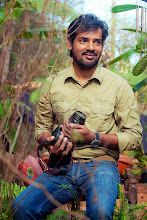
Nirmal Kulkarni.

Friday, September 17, 2010

Nirmalya Transformation project


NIRMALYA TRANSFORMATION PROJECT OF VASCO…

AN ‘I’DEA THAT DROPPED THE ‘I’ TO BECOME ‘WE’…

The Nirmalya Collection project began as an intention a month prior to the Ganesh festival with a vision of making a holistic approach to an ecofriendly Ganesh Chaturthi a reality. Roopa Bandekar of Earthworm Ecostore introduced 100% ecofriendly Clay Ganesh idols in Goa for the first time that were painted with natural colours like multani mitti, turmeric and kumkum from Eco-exist Pune and conceptualized the NIRMALYA TRANSFORMATION PROJECT for the Port Town of Vasco.

Although collection of Nirmalya is not in itself new to Goa, but it was felt that there existed great gap between the devotees and the supposed ‘few’ who were concerned about the environmental damage caused during the immersion of nirmalya (such as garlands, flowers, coconuts, plastic and thermacole. The Germ of Vasco ‘I’dea was to ALWAYS keep the in mind the religious sentiments of the people AND include them in the process of change. The method: to make it a people’s movement; to do away with bins at immersion sites and replace them with the welcoming presence of enthusiastic volunteers.

When this ‘I’dea was first sounded off to Mrs. Lalita Joshi, a environmental catalyst and Director of BBA Dept of MES college Zuarinagar, it was accepted with such great enthusiasm that the ‘I’ of that idea quickly dropped and turned into WE….everybody who gave a ear to the idea absorbed it as their own. MES college Team Mr. Kevin Dsilva and Ms Pallavi Shirodkar took on the task of composting the collected nirmalya;

Mr. Shekhar Khadapkar, Chairperson MMC willingly supported us with funding for promotional material and workers at immerison sites.

Our enthused team consisted of Daji Salkar, Namdeo Chopdekar of Bharat Swabhiman , Jayant Jadhav of Vinayak Kala Kendra, Alka Damle, Neelima Parulekar, Renu Rao, Dinesh Heda, Amit Tapadia, Amit Bandekar and Charuta Mehta of Rotary Club, Roshan Gunjal, Shammi Salkar and J C Shalaka and many many more volunteers

WHAT WE DID:

We created posters and Flexes “ Ganpati Bappa Morya, Nirmalyacha roop badluya’ in marathi and Ganpati Bappa Morya, lets Transform our Nirmalya’ in English. And put them up a week before the Festival at Key sites in Vasco, shops, temples, market areas, bagayatdar, at points of traffic movement and relevant shopping sites. The message was spread personally from Temple gurujis, Sarvajanik mandals, house-to-house visits, through institutions, organizations, Banks, offices and articles in local publication Vasco Watch.

Pandals were erected keeping in mind high visibility and accessibility to all at the immersion sites of Khariwado, Vaddem Lake, two at Baina beach and one site at Chicalim with the Panchayat.

Two volunteers at each site along with MMC workers collected nirmalya from the people and most sites segregated at SOURCE from 8:30 p.m. to 2.30 a.m. in shifts or some of them were present throughout the time. The MMC vehicle took the Nirmalya to MES college the next morning for final segregation and composting.

WHAT MADE THIS CAMPAIGN UNIQUE!

· This WAS A PEOPLE’S CAMPAIGN and did not leave the sense of responsibility in the hands on the Government body or a single “NGO”/ organization.

· We consciously kept away from the ‘people versus environment’ approach.

· All Promotional material was printed in two languages Marathi and English languages keeping in mind its target audience.

· The campaign reached from household to household at a personal level.

· The campaign was carried out with minimum costs with a few baskets and enthusiastic volunteers. This helped us not only to understand how many people willingly gave their nirmalya, how many needed to be requested and what were the reservations of the unwilling but also to make recordings for the future.

· Different sites have different volumes of nirmalya collection on different days; we learnt that in some places 10 bags are not enough at all and in some areas a few suffice. It gave us information to plan for the future.

· The effort of being present and receiving the the Nirmalya at immersion sites was a trust building exercise which propelled more people to give

· Dinner can be Prasad! Prasad IS dinner!… the sharing of Prasad between the devotees and the volunteers and the quantities consumed by each volunteer, itself suggests that this was a project that sent great vibrations back to the earth!

And as Daji put it “Now my whole car smells of Nirmalya.” makes this project one of its kind!

IT WAS AN OVERWHELMING SUCCESS!

Most of our volunteers despite having their own household celebrations gave time, effort and enthusiasm to this project proving that where there is a will there the time.

All of us felt that much of the general public were concerned and ready for solutions.

Many devotees who had reservations were reassured by our presence and positive approach.

Our collections were almost 60% successful at all our locations.

Our immersion sites showed visible less damage the next morning.

We plan to continue the same awareness campaign with all the learnings of this one for the next years to come. And thank Each and every person who handed their sacred Nirmalya to us thus became a part of “We” project.

ROOPA BANDEKAR

Friday, September 3, 2010

First Record of the Jerdon’s Red Spotted Pit Viper from the Republic of India.


First Record of the Jerdon’s Red Spotted Pit Viper (Protobothrops jerdoni xanthomelas) from the Republic of India.

While

conducting a Herpetofaunal survey of Eaglenest Wildlife Sanctuary, West Kameng

district, Arunachal Pradesh, India, during 2006-2008, four Indian researchers reported the first record of the Jerdon’s Red Spotted Pit viper (Protobothrops jerdoni xanthomelas).

This venomous sub-species of Jerdon’s Pit viper is an addition to the 278 plus species of snakes documented in the country. With the addition of this species, the number of pit vipers found in India has risen to over 21 species.

The earlier records of this snake are from central and southern China, from Henan, Shaanxi, Gansu, Sichuan, Guizhou, Hubei and Guangxi Provinces. The current range record of this subspecies from Lama Camp (West Kameng district, Arunachal Pradesh, India) is a range extension of approximately 1,200 km southwest from Sichuan in China - the nearest area where the Jerdon’s Red Spotted Pit viper (P.j. xanthomelas) has been reported.

Four individuals of this snake were found by the team that included Amod Zambre from Pune, Chintan Sheth from Bangalore, Shashank Dalvi from Mumbai and Nirmal Kulkarni from Goa. All the individuals were found at 2,350 meters above sea level.

Pit vipers are highly evolved venomous snakes belonging to the sub family Crotalinae that have deep pit, or fossa, in the loreal area between the eye and the nostril on either side of the head. These loreal pits are the external openings to a pair of extremely sensitive infrared detecting organs, which in effect give the snakes a sixth sense that helps them to find and perhaps even judge the size of the small warm-blooded prey on which they feed

The Journal of Bombay Natural History Society, Mumbai, has accepted the research paper concerning this important find.

The team has thanked Ramana Athreya – Kaati Trust/Eagle-nest Biodiversity Project who provided funds to survey Eaglenest WLS, snake taxonomist Ashok Captain for editing and reviewing the manuscript; Indi ‘babu’ Glow for everything in Eaglenest. Kesang, Phurpa, Maila, Khandu, Jetha, Neema and Dorjee for their tireless help during field work. The team has also thanked the Arunachal Forest Department (especially P. Ringu and G. N. Sinha) for permissions to work in the area.

Regards,

Amod Zambre

Chintan Sheth

Shashank Dalvi

Nirmal Kulkarni

Tuesday, August 31, 2010


Earthworm Ecostore brings yet another offering in its endeavor to present options for celebrating Safe Festivals.

A TRULY eco friendly Ganesh idol is one that is made of clay and uses natural colours so that it does not contaminate the water bodies; this year we have collaborated with eCoexist, a social enterprise in Pune, to bring you truly eco-friendly Ganesh Idols made of Clay and painted with turmeric, geroo, and multani mitti.

The colors which were once used traditionally for these idols are lost to brightly coloured toxic paints that contaminate our seas, rivers, lakes and wells.

The need to create awareness and bring about a conscious change of using a truly eco friendly Clay Ganesh idols with natural colors prompted us to bring the idols from Pune.

A limited number of idols will be for sale as well as display at its store at Alto Porvorim from 4th September onwards. All are welcome to see how beautiful these 100 percent hand molded eco idols look.

Earthworm eco store is also promoting eco friendly decorations and garlands to replace those made out of plastic and other non biodegradable materials at its store in Alto Porvorim and at select outlets across the state.

Celebrating Ganesh festival at our store, we would host a clay idol making workshop by sculptor Sachin Madage on the 4th of Sept for children. And on 9th September Mr. Rajendra Kerkar would talk on the “Significance of Matoli during Ganesh Chaturthi” on the 9th of Sept.

Earthworm eco store is also part of an effort to recycle and compost the Nirmalya that is generated from the festival in Vasco city along with the Vasco municipality and other NGO’s and individuals in the city.

For information and inquiries please call us at 08322410871 or email at earthwormgoa@gmail.com

Monday, August 16, 2010

RARE INSTANCE OF GREEN VINE SNAKE EATING A SHIELDTAIL SNAKE.


A rare instance of a Green vine snake (Ahaetulla nasuta) preying upon a Large scaled shieldtail (Uropeltis macrolepis macrolepis) was recorded by herpetologist Nirmal Kulkarni and his team in the Chorla Ghats forests of the Mhadei Bio region on the 15th of August 2010.

Interestingly, the Green Vine snake is a partially arboreal species of snake while the large scaled shieldtail is an inoffensive burrowing forest species that is endemic to the Western Ghats of India.

This is the second report of a Green Vine snake feeding on a shieldtail snake in the Northern Western Ghats of India, the first report being from Maharashtra by herpetologist and Curator of the Bombay Natural History Society Mr. Varad Giri a few years ago.

The Green Vine snake is uncommonly seen on ground and feeds mainly on lizards, frogs and small birds. It is a mildly venomous snake and the venom is capable of paralyzing small prey.

Shieldtail snakes are strictly forest species of burrowing snakes that are usually encountered under humus or leaf litter in dense forest habitats of the Western Ghats forests and are known to be highly elusive in most of their range. Encountered in thickly forested areas or on the fringes of forest habitats and open patches, Shieldtail snakes can be observed and studied only in the 4 months of monsoon period in the field, after which they burrow under the forest floor, sometimes even 2-3 feet in the soil. The specie documented in the Mhadei Bioregion includes the large scaled shieldtail, the pied belly shieldtail and the Elliot’s shieldtail.

There is a lacuna of knowledge about these species whose ecology and habitat preference is lest known merely from a few observations and hence the current observations of predator prey relationships with a partially arboreal species are considered important by researchers.

The team observed the large scaled shieldtail being caught at mid body by the Green Vine snake and pulled up from the leaf litter to 1 foot above the ground to be swallowed head first followed by the complete snake. The entire time span of the incident was approx 40 minutes after which the Vine snake proceeded to a higher branch at 5 feet above the ground and remained there for 20 minutes before moving again.

The approx length of the Green vine snake was 3 feet while the large scaled shieldtail was approx 12 inches. Non-intrusive observations and photo documentation were carried out to document the behavior of the two species and the observations are being reported to the Center for Herpetology as well as the Indian Herpetological society for information.

The incident was recorded at 630 meters above sea level in secondary forest vegetation and the skies were partially cloudy. The humidity at the time was 78 percent and the temperature was 28 degrees Celsius. Other data including GPS locations and the dominant vegetation in the area was Makad limbu (Atlantia monophylla) and False guava (Catunaregam spinarum). The nearest water source to the area was approx 4 meters away from the incident.

The team consisted of Mr. Nirmal Kulkarni and Mr. Krishna Gawas affiliated to the Mhadei Research Center and Mr. Sunil Patil a volunteer.

Nirmal Kulkarni

Email- ophidian_nirmal@yahoo.co.in.

Thursday, August 5, 2010

Mhadei Herpetology Camp 2010

MHADEI HERPETOLOGY CAMP 2010

THE SETTINGS-

The Chorla Ghats forests lie on the tri state boundaries of Goa- Karnataka-Maharashtra states and are part of the Mhadei Bio region. Classified as a Mega Biodiversity hotspot and an Important Bird area, the region is acknowledged as a large cat corridor and an area of high endemism for lesser-known fauna.

The forests types predominantly include mixed moist deciduous and semi evergreen forests with intermediate canebrakes and riverine vegetation.

Heavy to medium rainfall, diverse vegetation and high humidity has led to creation of niche habitats for Herpetofauna that are unique to this region. Availability of a variety of prey base and minimal human disturbance has ensured sustained stability of small populations in certain pockets of these forests.

THE SEASON-

Climate- Heavy to medium showers with windy weather.

Temperature- 18 degrees Celsius to 22 degrees Celsius.

Humidity- 85 percent and above.

THE OBJECTIVE-

The Herpetofauna of this region has been overlooked by serious workers and researchers in the past and the only work carried out by team leader Nirmal Kulkarni and his colleagues have resulted in documentation of 2 new caecilian species besides other range extensions of endemic and rare reptiles and amphibians. The team will help compile a basic checklist of the Herpetofauna in identified areas of interest and lay foundations of further work in the region.

CAMP STRUCTURE-

The Mhadei Herpetology camp has been specifically designed keeping in mind the unique Monsoon Herpetofauna of the Northern Western Ghats of India of which the Mhadei Bio-region is a part.

During this camp we will explore High altitude plateaus, monsoonal stream eco-systems and fringe forest environments. The program will also include an orientation on basics in Snake taxonomy, Reptile rescue, and Snake Bite protocol and wildlife photography.

Participants will also get to learn techniques of field surveys and scientific documentation of Herpetofauna with the help of field equipment.

WHAT TO EXPECT-

The Monsoons offer opportunities rare opportunity to observe and study Herpetofauna that are otherwise inactive for the rest of the year.

Participants will be able to document over 20 rare, endemic and uncommon species of Herpetofauna. Some species include-

1. Malabar Gliding Frog (Rhacophorus malabaricus)

2. Pied belly shield Tail snake. (Melanophidium punctatum)

3. Beddome’e keelback snake. (Amphiesma beddomei)

4. Malabar Pit viper. (Trimeresurus malabaricus)

5. Mhadei caecilian. (Gegeneophis mhadeiensis)

6. Malabar Night frog. (Nyctibatrachus major)

TEAM LEADER-

Nirmal Kulkarni

A qualified field ecologist and herpetologist, Nirmal Kulkarni has to credit the discovery of 2 new species of legless amphibians (caecilians), a host of research papers and an experience of over 15 years in the forests of the Western Ghats of India. He is also a wildlife photographer and specializes in photographing lesser-known fauna. He currently works on pit vipers and amphibians in the Northern Western Ghats of India.

ABOUT HERPACTIVE-

Herpactive is an initiative by Nirmal Kulkarni, herpetologist and wildlife photographer to create awareness and instill appreciation for Herpetofauna (reptiles and amphibians) of Goa in particular and the country in general.

Herpactive aims to promote the science of field herpetology by conducting walks, surveys, training workshops and field technique sessions for budding herp- enthusiasts as well as serious students of main-stream science.

DATES- 25th 26th and 27th August 2010.

THE ACCOMODATION-

Participants will stay in Shared accommodation at Swapnagandha Resort Chorla Ghats.

Participants will also visit and work at the Mhadei Research Center.

Food will include Vegetarian and Non-vegetarian options.

ESSENTIALS-

1. Fast drying earth colored field clothes.

2. Gumboots or good walking shoes fit for rainy weather.

3. Powerful Torch or Headlight- with extra batteries.

4. Rainwear (Raincoats or Ponchos).

5. Field Note Pad and Pen/pencil.

6. Personal medical kit if any.

7. Back pack for field.

8. Water bottle or container for Field.

9. Sleeping bag or blanket and sheet.

10. Camera.

11. Personal toiletries.

CAMP FEES- RS. 7000/- (Seven Thousand only) including Pick up and drop from Panjim, all meals, course fee and stay at shared accommodation at Swapnagandha Resort.

AGE GROUP- 18 YEARS TO 50 YEARS

NUMBER OF SEATS- 8 (EIGHT SEATS ONLY)

NOTE-

1. THIS IS NOT A PICNIC SO PLEASE BE SURE TO KNOW THAT PARTICIPANTS WILL HAVE TO MAINTAIN DISCIPLINE AND FOLLOW RULES AS LAID BY SURVEY LEADERS.

2. ALCOHOL CONSUMPTION WILL NOT BE ALLOWED DURING THE ENTIRE PERIOD OF THE SURVEY.

FOR DETAILS CONTACT- OPHIDIAN_NIRMAL@YAHOO.CO.IN

OR CALL ON 09326107079 (Nirmal) OR 09822586918 (Glenda).

Monday, July 12, 2010