Wednesday, November 16, 2016

ECHIS CONSERVATION HUB
 Conception of ECHIS:
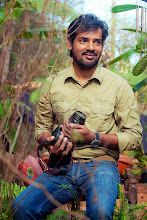
I have envisaged the Echis Conservation Hub as a means of creating a platform for students, nature enthusiasts and wild life researchers in a semi urban landscape. The Echis Conservation Hub is located in Nachinola village, a quiet hamlet situated in the heart of Bardez taluka 10 kilometres away from capital city of Panjim and 5 kilometers from Mapusa city in Goa. 
Among our many objectives, the most important one is to set up a permanent conservation research base and nature reference and reading library that can be used by researchers and students.
Even though I will lead activities here, this is essentially your base and together we must aim to put into place-
3 different habitats for young students to study
a) Pond ecosystem.
b) Stony laterite ecosystem.
c) Mixed moist forest ecosystem.
 A self sustained vegetable patch and fruit trees plot.
 A small holding facility for injured and rescued urban wildlife.
 An Art Gallery that will house artefacts, art and images inspired by nature that will sustain the space.
hope to see you all here soon.
cheers
nirmal 

Friday, November 4, 2016

“Will the people of Belagavi take Mahadeis water or conserve their own?”
Finally a hard hitting question that we need to address in this crisis. 
http://allaboutbelgaum.com/…/dont-steal-someone-elses-wate…/

Saturday, September 10, 2016

Fire crackers are definitely a bane for urban wildlife as well as infants and elders. Eyes hurt, throats and heads ache soon after. Earaches too. Add to that the noise and smoke pollution and its a deadly combination. Besides which pets are severely affected, at times permanently I am told. And then there is the mindless waste of money....to create noise and smoke... I wonder why and how people who indulge in this act enjoy it. I am at a loss of words.

Thursday, July 28, 2016

Vazra Sakla falls. Chorla Ghats. 2016.
For over a decade and a half I have been witness to the rebirth of these majestic meter falls that cascade 146 meters to revive the Valavanti river during the South West monsoons. This later joins the Sankhli tributary of the Mhadei- Goa's lifeline. My work and that of my team to document this regions ecological, cultural and anthropological diversity continues…and these falls provide the much needed push to carry this work forward.

Wednesday, July 27, 2016

Throughout Indian history, as agriculture became more demanding, the need for additional power from draft animals became essential. 
Indian yokes were designed with specific agricultural and transportation tasks in mind.
Over time yokes were adapted and almost exclusively hand carved to better fit the animal in order to maximize comfort and their willingness to work. Even today, where they are still in use, animal comfort is given priority whilst crafting a new yoke.
Yoke designs continue to vary according to local customs and regions India. This has been influenced by the type of cattle, the resourcefulness of the farmers, their skills in recognizing animal comfort and the culture of the people.
Placement of the holes on a yoke is a skill and almost achieved flawlessly as an art. It decides the comfort as well as the utility of the yoke for the bulls as well as the tiller.
This yoke has been used for over three generations, venerated and loved till a mechanical tractor replaced it. The holes that held the ropes now seem like gapes in an abyss of uncertainty.
My tryst with bull yokes began a decade ago whilst walking and interacting with forest and hinterland communities in Goa and Karnataka. With a small collection of yokes that hold on to memories now, the journey contunies…

Thursday, July 21, 2016

Bull yokes and light

Wooden yokes, usually hand carved from local materials, have traditionally been easy, effective and economical ways to harness the locomotive energy of the Indian humped bull or ox. Yokes are simple in design compared to the more complicated harnessing systems used for horses.
Cattle have been yoked for thousands of years for one reason. They can be. While I draw parallels to this very fact to instances in human society, that tale will be for another day.
But bulls easily adapt to training without complicated bridles, nose rings, bits, reins and harnesses. Cattle work in pairs because they are herd animals that are calmed and more easily controlled by the presence of another animal.
Yokes are made from traditionally mandated wood and often single piece logs. These are cared for and sustained for years, handing them down one generation after another until they give way. My fascination with yokes and the tales they withhold began a decade ago…whilst I watched two oxen pull this yoke with neck, shoulders and grit. Over time these yokes were cast away and replaced by tractors and power tillers.

But my tryst with this simplistic and yet powerful field tool that shaped our agricultural economy continues…’Bull yokes and Light’ will be the first step in this direction.